Mass People belief that Allergy Increased after COVID-19 Vaccination?
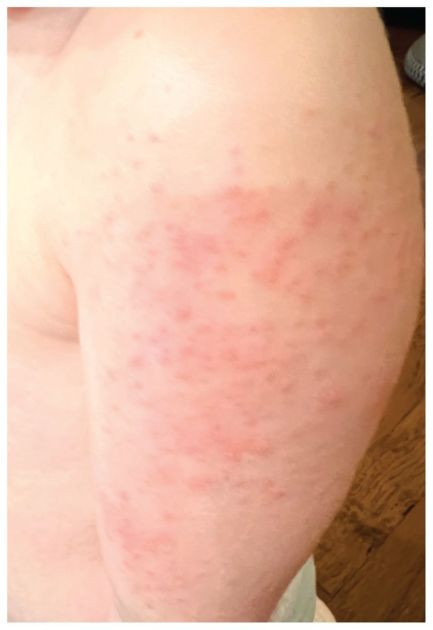
Since the start of the worldwide COVID-19 vaccination campaign, many people have come to believe that receiving the COVID vaccine has made allergies, itching, and skin rashes worse. . Personal experiences, social media interactions, and the spread of misleading information have all provided evidence for this idea. How accurate is this belief, though? Let's look at the problem from a scientific and factual standpoint.
The procedure of vaccine development usually follows several well-defined stages to ensure safety, effectiveness, and quality. Below is a clear, step-by-step explanation:
1. Research Stages as Below:
- Scientists study the disease-causing organism (virus, bacteria, or fungus).
- They identify antigens (parts of the pathogen that trigger an immune response).
- This stage often takes 2–4 years.
2. Pre-Clinical Stage
- Vaccine candidates are tested in laboratory experiments and animal models.
- Purpose:
- Check safety and effectiveness.
- See if it produces an immune response
- Only successful candidates move forward.
3. Clinical Trials for Development (Human Trials)
Phase I Trials
- 20–100 healthy volunteers
- Focus: Safety, dosage, and side effects
- Duration: Several months
Phase II Trials
- Several hundred participants
- Focus: Immune response, optimal dose, and continued safety
- Includes people similar to the target population
Phase III Trials
- Thousands to tens of thousands of participants
- Focus: Effectiveness and detection of rare side effects
- Compares vaccinated vs. placebo groups
4. Regulatory Review and Approval
- All trial data is submitted to regulatory authorities (e.g., WHO, FDA, EMA, GAVI).
- Authorities review:
- Safety
- Efficacy
- Manufacturing quality
- Approval is granted only if standards are met.
5. Manufacturing
- Large-scale production begins under Good Manufacturing Practices (GMP).SOPs
- Strict quality control at every step(Q&A)
6. Quality Control & Batch Testing
- Each vaccine batch is tested for:
- Purity
- Potency
- Sterility
7. Distribution and Storage
- Vaccines are distributed through cold-chain systems.
- Proper storage temperatures are essential.Keep Record
8. Post-Marketing Surveillance (Phase IV)
- Ongoing monitoring after public use.
- Detects very rare or long-term side effects.
- Systems like adverse event reporting (AEF) are used.
Research Summary Flowchart:
Research → Pre-clinical → Phase I → Phase II → Phase III → Approval → Manufacturing → Monitoring-Feedback.
Claim by Mass people:
“COVID-19 vaccines were invented too quickly for political reasons, so proper research protocols were not followed.”
Reality: What actually happened?
1. Protocols were followed—steps were not skipped
All standard vaccine development phases (pre-clinical, Phase I, II, III, and regulatory review) were completed for COVID-19 vaccines.
What changed was speed, not scientific rules.
Why faster was possible:
- Some phases were run in parallel, not sequentially
- Governments provided massive funding, removing delays
- Regulatory agencies used rolling reviews (checking data as it came)
- Global collaboration reduced duplication of work
2. COVID-19 vaccines were not “invented from scratch." it was mRNA vaccines:
Especially for mRNA vaccines:
- Research on mRNA technology started in the 1990s
- mRNA vaccines were already tested for SARS, MERS, influenza, and cancer
- Scientists only had to replace the genetic code for SARS-CoV-2
So when COVID-19 appeared, the platform was ready.
3. Large clinical trials were conducted
- Phase III trials included tens of thousands of participants
- More participants than many traditional vaccines
- Effectiveness and side effects were statistically analyzed
- Independent monitoring boards oversaw safety
This scale is not typical of rushed or politically motivated science.
4. Emergency Use Authorization (EUA) caused confusion
Many people misunderstood EUA as “experimental.”
In reality:
- EUA is allowed only when strong evidence of safety and benefit exists
- It does not mean incomplete testing
- Full approval followed after longer follow-up
5. Politics influenced urgency, not science
It is true that:
- Governments wanted vaccines as early as possible
- Political pressure existed
But:
Scientists, not politicians, controlled trial data
- Regulatory agencies rejected or delayed vaccines that failed standards
- Multiple vaccines from different countries showed similar results
This consistency supports scientific validity, not political fabrication.
6. Post-marketing surveillance proved transparency
After public use:
- Side effects were continuously monitored worldwide
- Rare risks (e.g., specific clotting syndromes) were identified and disclosed
- Vaccine guidelines were updated accordingly
This shows the system worked, not failed.
- COVID-19 vaccines were not rushed without protocol
- They were developed faster due to preparation, funding, and global urgency
- Some communication mistakes increased public mistrust
- 🔬 Scientifically, core safety and research standards were maintained
Why Do People Feel That Allergies Increased After Vaccination?
1. Increased Health Awareness of people
After COVID-19, people became more attentive to their bodies. Minor issues such as sneezing, itching, skin redness, or seasonal allergies—previously ignored—are now noticed more seriously.
2. Coincidental Timing
Many allergies occur due to seasonal changes, environmental factors, or lifestyle habits. When symptoms appear close to the time of vaccination, people often assume the vaccine is the cause, even though there is no scientific proof.
3. Post-COVID Effects
After COVID-19 infection, some people experience temporary immune system sensitivity, allergy, skin rash, and itching pandemically. Many mistakenly identify these post-COVID symptoms as vaccine side effects.
4. Influence of Social Media
Unverified information and personal stories spread rapidly on social media, creating fear and shaping public opinion without scientific evidence. Some media say vaccines came fast as powerful states politically approve them to show their dignity as well as for business.
What Does Science Say?
- COVID-19 vaccines do not cause long-term allergies in the general population.
- Mild allergic reactions (such as redness, itching, or slight swelling) may occur in rare cases, similar to other vaccines, and are temporary.
- Severe allergic reactions (anaphylaxis) are extremely rare and usually occur in individuals with a known history of severe allergies.
- According to the World Health Organization (WHO) and other global health authorities, COVID-19 vaccines are safe and do not increase allergy prevalence.
Why Is This Misconception Dangerous?
- It promotes vaccine hesitancy, putting individuals and communities at risk.
- It diverts attention from real allergy triggers such as air pollution, dietary habits, stress, and climate change.
- It increases unnecessary fear and the risk of improper self-medication.
What Should Be Done?
- Strengthen science-based health awareness.
- Encourage verification of information before believing or sharing it.
- Advise people to consult qualified healthcare professionals.
- Clearly distinguish between post-COVID symptoms and vaccine-related myths.
Conclusion
The belief that allergies have increased due to COVID-19 vaccination is largely driven by fear, coincidence, and misinformation, not scientific evidence. While personal experiences matter, public health decisions must be guided by research, data, and medical expertise. COVID-19 vaccination remains one of the most effective tools for protecting individual and public health.
Mohammad Tajul Islam
Ex. Research Officer, System Vaccinology, ICDDRB
Ex. Team Assistant Covid-19 Response, WHO
+8801862062660
mtajul2020@gmail.com